Starting padel? Compare the best padel rackets for beginners in Ireland, with light, forgiving picks that are easy on your arm and your wallet.
Short answer: the Wilson Optix V1 is the best padel racket for most beginners. It is round, soft and easy to control. On a tight budget, the Dunlop Megamax gives you the same round, forgiving shape for less.
- Round or teardrop Round and teardrop heads with low or even balance are the easiest shapes to learn with.
- 350 to 370 g Most beginner rackets sit in this range. Go lighter if you have had elbow or shoulder trouble.
- Soft core, fibreglass face A soft EVA or foam core and a fibreglass face give easy power and a gentle feel.
- Keep it under €80 You do not need carbon or a pro model yet. Save the upgrade for when you play every week.
What makes a padel racket good for beginners?
A beginner racket should forgive mistimed shots and stay comfortable on your arm while you learn. That points to the same recipe almost every time.
A round or teardrop head. These shapes usually carry their weight low or in the middle of the racket. That makes them easy to swing and quick to bring back into position at the net.
A soft core. Soft EVA or foam cores flex more on contact. The ball comes off the face with less effort, and less vibration travels down to your elbow.
A fibreglass face. Fibreglass bends more than carbon, so it adds a little power and feels softer. It is also cheaper to replace if you clip the glass, which every beginner does.
Weight around 350 to 370 g. Light enough to swing freely, heavy enough to stay stable when a hard shot comes at you.
Want the full explanation of shapes, balance and materials? Read our guide on how to choose a padel racket.
Padel Player earns a small commission if you buy through links on this page. It never changes which rackets we recommend.
Our top beginner rackets at a glance


Should you rent or buy your first racket?
If your club rents rackets, there is no harm in playing a couple of sessions with one first. Once you have booked a third session, it is worth owning your own. A racket you know feels the same every time, and that makes learning faster.
What should you check before you buy?
Four things that matter for beginners
Decides how the weight is spread and how forgiving the racket feels.
Heavier rackets tire the arm faster.
Where the weight sits along the racket.
Sets the feel and how much power you get for free.
Does the shape decide where the sweet spot is?
Less than most guides suggest. Researchers at the Universitat Politècnica de València tested 225 rackets with a robot and found the sweet spot sat 118 to 147 mm from the top of the head whatever the shape, balance or weight. What did change was how wide that sweet zone was, and how much vibration reached the handle on mishits.
For a beginner, that means the shape name is a guide, not a guarantee. A soft core and a sensible weight do more for comfort and forgiveness than whether the box says round or teardrop.
How do you protect your elbow as a beginner?
Elbow pain is the most common padel complaint. A review of padel injury studies in BMJ Open Sport and Exercise Medicine found the elbow was the most frequently injured area, ahead of the knee and shoulder. The HSE also lists racket sports among the common causes of tennis elbow.
A few habits help. Choose a light, soft racket, keep your grip relaxed between shots, warm up your forearm before you play, and build up from one or two sessions a week rather than five. If pain sticks around for more than a couple of weeks, see a GP or physio before it gets worse.
We picked these five rackets by comparing published weight, balance, core and face specs for beginner models stocked for delivery to Ireland. Every pick is round, teardrop or all-round in shape, and none needs a big swing to work.
Best beginner padel rackets compared
| Shape | Weight | Price | ||
|---|---|---|---|---|

Optix V1
Best overall
|
Round | About 360 g | €69.95 | Check price |

Megamax
Best budget
|
Round | 360 to 370 g | €46.87 | Check price |

Match Light 3.4
Best lightweight
|
All-round | 345 to 360 g | €49.95 | Check price |

Evo Speed
Best for easy power
|
Teardrop | About 350 g | €68.77 | Check price |

Drive Blue
Most comfortable
|
Round | 360 to 375 g | €59.00 | Check price |
Which beginner padel racket should you buy?
Each pick below lists shape, weight, balance, core and face material, plus who it suits best.
Round, soft and easy to control
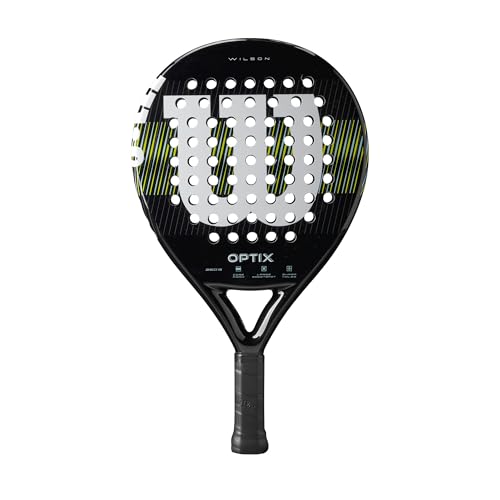
The Optix V1 is Wilson’s starter racket, and it gets the beginner recipe right. The round head and 265 mm balance keep the weight near your hand, so it is easy to react at the net.
A low-density foam core gives a soft, comfortable feel, and the fibreglass construction adds a little pop on volleys without any effort.
| Shape | Round |
| Weight | About 360 g |
| Balance | Low (265 mm) |
| Core | Low-density foam |
| Face | Fibreglass |
| Suits | Complete beginners and social players |
- Very easy to control
- Soft feel that is kind to the arm
- Limited power on smashes
- You may want more bite as you improve
Forgiving round racket at a low price
The Megamax is one of the cheapest branded rackets worth buying. The round head is forgiving, and the even balance makes it easy to handle for new players.
Dunlop uses a Pro EVA core and a graphite face, which gives a slightly firmer, crisper feel than the fibreglass rackets here.
| Shape | Round |
| Weight | 360 to 370 g |
| Balance | Medium, even |
| Core | Pro EVA |
| Face | Graphite |
| Suits | First-time players on a budget |
- Very low price
- Forgiving round head
- Firmer feel than foam-core rackets
- Basic finish
Light all-rounder for smaller players and juniors
The Match Light 3.4 is one of the lighter adult rackets you can buy, at around 352 g unstrung. That makes it a strong choice for smaller players, teenagers and anyone with a sensitive elbow or shoulder.
The soft EVA core and fibreglass face keep it forgiving, and the all-round shape sits between round and diamond.
| Shape | All-round (hybrid) |
| Weight | 345 to 360 g |
| Balance | Medium |
| Core | Soft EVA |
| Face | Fibreglass |
| Suits | Lighter players, juniors, sensitive arms |
- Very light and quick
- Low price
- Less stable against hard hitters
- Strong players will outgrow it fast
Oversized teardrop that adds depth without effort
The Evo Speed suits beginners from tennis or squash who already have a decent swing. The oversized teardrop head and higher balance send the ball deep with less effort.
A fibreglass face with Innegra and a soft foam core keep the feel gentle, even though the racket leans towards power.
| Shape | Teardrop, oversized |
| Weight | About 350 g |
| Balance | High (270 mm) |
| Core | Soft foam |
| Face | Fibreglass with Innegra |
| Suits | Beginners from other racket sports |
- Easy depth from the back
- Light for a power racket
- Less control than round rackets
- Higher balance tires the wrist sooner
Soft, springy round racket for relaxed play
The Drive Blue is adidas’s entry round racket. The soft Performance EVA core and fibreglass face give a springy, comfortable feel that suits relaxed social games.
Frame reinforcements help it shrug off the knocks against the glass that every new player makes.
| Shape | Round |
| Weight | 360 to 375 g |
| Balance | Even |
| Core | Soft Performance EVA |
| Face | Fibreglass |
| Suits | Social players who want comfort |
- Soft, comfortable feel
- Reinforced frame
- Limited power
- A touch heavier than the Match Light
How much does it cost to start padel in Ireland?
The racket is the biggest one-off cost, but court time adds up quickly. Padel LK in Limerick charges €40 to €48 per doubles court hour, which works out at €10 to €12 each when four of you share. Coaches often say padel is easier to pick up than tennis, and a Cavan coach told the Irish Farmers Journal that the walls and underarm serve keep rallies going from the very first session.
Your racket must also have its wrist cord attached and worn during play. The FIP Rules of Padel make it compulsory, so check it is fitted before your first game.
What should you read next?
Compare every type of racket in our best padel rackets in Ireland guide, or see our best cheap padel rackets under €100. Then sort the rest of your kit with our best padel shoes and padel starter kit guides.
Coming from tennis? Our padel vs tennis guide explains what carries over. Buying for a junior or getting back into sport later in life? See our kids padel rackets and padel for over-50s guides.
Beginner racket questions
What weight padel racket should a beginner use?
Most adult beginners do well with 350 to 370 g. Choose the lighter end if you are smaller, older or have had elbow or shoulder trouble.
Is a round or teardrop racket better for beginners?
Both work. Round rackets are the easiest to control. Teardrop rackets add a little more power and suit beginners who already play tennis or squash.
Should a beginner buy a carbon padel racket?
Usually not. Carbon faces are stiffer and reward clean contact. A fibreglass face with a soft core is more forgiving and cheaper to replace.
How long will a beginner padel racket last?
Playing once or twice a week, a beginner racket usually lasts a year or more. Most players upgrade before it wears out, once they know whether they prefer control or power.
Can kids use these rackets?
Teenagers can usually manage the Match Light. Younger children need a junior racket, which is shorter and lighter, from about 265 g.